
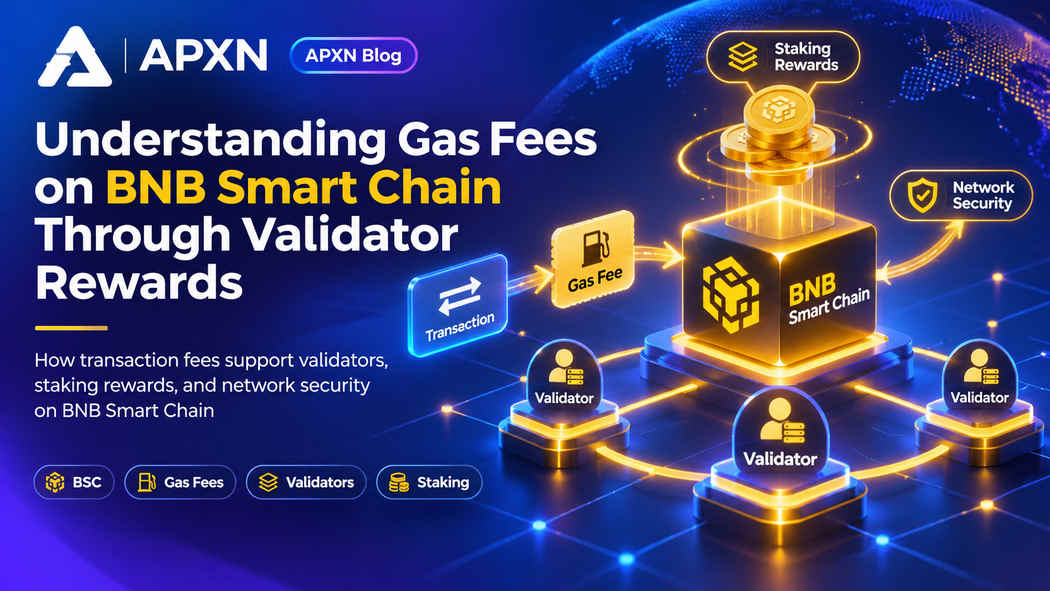
BNB Smart Chain is a high-performance blockchain network that uses BNB as its native utility token to pay transaction fees. Since the chain is EVM-compatible, existing Ethereum smart contract skills transfer directly when building or interacting with applications. Resources for connection include network information, RPC providers, and wallet configuration steps. The chain relies on a system of 45 validators operating under Proof of Staked Authority consensus. The active validator set consists of 21 Cabinet and 24 Candidates, with the most bonded validator candidates becoming validators that produce blocks. This structure supports security through double-sign detection and malicious vote detection while maintaining chain finality.
Validator Rewards From Collected Fees
The reward for validators comes directly from the fees collected from transactions in each block. Validators can decide how much of those fees to share with delegators who stake BNB to them. This sharing mechanism helps attract additional staking from users. Every validator takes turns producing blocks with equal probability when maintaining full liveness. Over time this equal opportunity leads stable validators to receive comparable total rewards even though stake amounts differ across validators.
When more users delegate to a single validator the per-delegator reward share can decrease because the total reward is divided among a larger stake. Rational delegators therefore tend to choose validators with lower current stakes provided the validator remains trustworthy. This dynamic reduces stake concentration and helps avoid situations where one validator accumulates a permanent advantage. The 100 percent liveness requirement ensures consistent participation across the validator set.
Network Design and Ethereum Compatibility
BNB Smart Chain functions as a self-sovereign blockchain that provides security through elected validators. The network is EVM-compatible and therefore supports existing Ethereum tooling while delivering faster finality and lower transaction fees. Fast finality allows the chain to reach final state within two blocks in most cases. Native dual-chain communication enables efficient interoperability between chains.
The overall design optimizes the network for high-performance decentralized applications that need fast and smooth user experiences. Because the chain inherits Ethereum tooling compatibility, developers can reuse familiar libraries and frameworks without learning entirely new systems. This compatibility extends to wallets, development environments, and other infrastructure already built for Ethereum.
Documentation Overview and Governance Elements
Official documentation provides an overview of the validator set and explains how staking operates within the network. Users can find dedicated sections covering staking overview, user guides, and instructions for building staking-related decentralized applications. Governance documentation includes an overview, user guide, and APIs that support participation in network decisions.
Validator documentation covers topics such as running a validator, creating a validator, and secure key management practices. Additional resources address slashing rules and monitoring tools that help maintain network integrity. The documentation set also references developer tools and indexing services that complement staking and governance activities.
Additional Benefits for Validators and Delegators
All validators in the current set receive transaction fees in BNB as their primary reward. Because BNB is not an inflationary token, there are no mining rewards of the type generated on networks such as Bitcoin or Ethereum. The gas fee itself serves as the major reward source for validators. A portion of collected fees is allocated specifically to reward finality voting.
Validators and delegators continue to receive other benefits associated with holding BNB because the token serves multiple utility functions beyond fee payment. These additional use cases remain available alongside the reward structure tied to transaction fees. The combination supports ongoing participation without relying on inflationary issuance.
Developer Resources and Quick Start Information
Developers can access a quick guide that supplies essential information for building on the chain. The guide covers getting started steps, connection details, obtaining tokens, and using the JSON-RPC API. Official developer kits and additional developer tools are listed to streamline application development.
The documentation also addresses node operators, account abstraction features, and staking-related resources that developers may need when creating applications. References to wallets, oracles, storage solutions, and analytics platforms appear in the same overview to help developers locate supporting infrastructure quickly.
Candidate Validators and Block Production Chances
The official set comprises 21 Cabinet members and 24 Candidates. Unavailable candidates may still face slashing, albeit at a reduced scale compared with active validators.
A motivation mechanism exists to keep candidate validators engaged in maintaining quality and helping secure the network. This structure provides a pathway for additional participants while preserving the stability of the primary validator group. Candidates therefore contribute to overall resilience even when their block production chances remain limited.
Frequently asked questions
How are transaction fees used within the validator system?
Transaction fees paid in BNB serve as the main reward for validators. Validators may share a portion of these fees with delegators who stake BNB to them. This sharing arrangement helps attract more staking while the fees themselves remain the primary incentive because BNB does not generate inflationary mining rewards.
What documentation supports staking and governance participation?
Official resources include a staking overview with user guides and instructions for building staking decentralized applications. Governance sections provide an overview, user guide, and APIs. Validator documentation covers running, creating, and securing validators along with slashing rules and monitoring tools.
How do candidate validators participate in block production?
Candidate validators can produce blocks and charge gas fees, yet they receive far fewer opportunities than the official validator set. The official set includes Cabinet and Candidate members. Candidates that become unavailable may still face reduced slashing, and a motivation system encourages them to maintain network quality.
Conclusion
Gas fees collected on BNB Smart Chain directly fund validator rewards and support the Proof of Staked Authority system. The 45-validator structure with its Cabinet and Candidate composition, combined with staking mechanics, distributes opportunities while maintaining security through slashing logic. Documentation resources outline how developers and participants can engage with these elements using existing Ethereum-compatible tools.
Related reading
This article is educational project content and should not be treated as financial, investment, legal or tax advice.