.png)
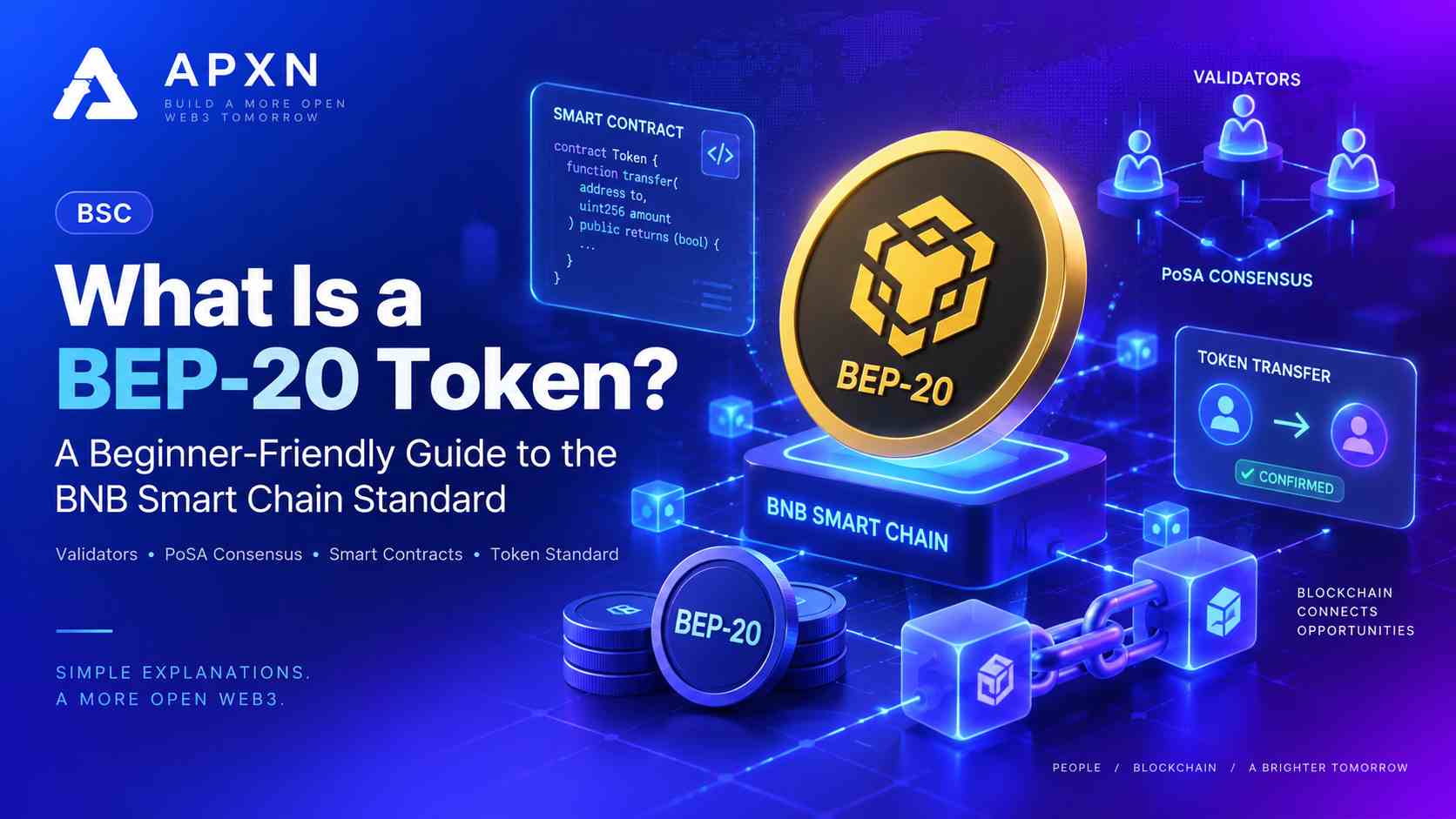
BNB Smart Chain brings programmability and interoperability to the BNB Beacon Chain through a Proof of Staked Authority system. The chain relies on forty five validators operating under this consensus to support short block times and lower fees. The most bonded validator candidates become validators that produce blocks while double sign detection and other slashing logic help maintain security stability and finality. All validators in the current set receive transaction fees in BNB as rewards since BNB itself is not inflationary. Gas fees serve as the primary reward source with a portion allocated to finality voting. BEP-20 defines an interface standard for token contracts on the chain by adapting the ERC20 protocol to enable basic transfer functionality and cross chain movement between BNB Beacon Chain and BNB Smart Chain.
Chain Overview and Validator Governance
BNB Smart Chain uses a system of forty five validators under Proof of Staked Authority consensus. The most bonded candidates advance to validator status and produce blocks. This structure supports governance through staking and allows the active validator set to consist of twenty one cabinet members plus twenty four candidates. Additional validators may join as backups when needed. The overall design maintains chain finality while incorporating slashing mechanisms for stability.
The symbol method under specification section five point one point one point two returns the token symbol as a string. This required method improves usability for tokens on the chain. Tokens that omit the symbol method cannot flow across BNB Beacon Chain and BNB Smart Chain. The approach ties token identification directly to validator governed network operations.
Validators Chain Security and Consensus Logic
Given more than half plus one honest validators the network operates securely under Proof of Authority principles. Byzantine validators may still attempt attacks such as clone attacks. Slashing logic penalizes double signing or unavailability to expose malicious actors quickly and reduce attack profitability. This logic supports overall chain stability and finality.
The active validator set includes forty five members split into twenty one cabinet and twenty four candidates. One hundred percent Ethereum compatibility allows modern proof of stake governance. Candidates produce blocks and charge gas fees yet with lower probability than the main set while remaining subject to slashing for unavailability.
Tokens Address Events and Validator Rewards
The transfer event must trigger whenever tokens move including zero value transfers. A token contract creating new tokens should emit a transfer event with the from address set to zero x zero. Validators receive transaction fees in BNB as rewards with a portion directed toward finality voting.
BNB serves as the reward token without inflationary mining incentives. Delegators and validators gain additional utility from holding BNB beyond gas fee rewards. The transfer event specification ensures consistent tracking across token operations managed within the validator secured environment.
Transfer Methods and Smart Contract Standards
The BEP twenty specification outlines methods including name symbol decimals total supply balance of transfer transfer from approve and allowance. These functions define core token behavior on BNB Smart Chain. The abstract section describes an interface for token smart contracts derived from the ERC twenty protocol.
Motivation for the standard centers on enabling token transfers and third party spending approvals. Implementation guidance covers both methods and events such as transfer and approval. The design supports token movement between chains while maintaining compatibility with existing Ethereum style smart contract patterns.
Smart Contracts Candidates and Standard Compatibility
The summary proposes an interface standard specifically for token contracts on BNB Smart Chain. This standard adapts ERC twenty to provide transfer capabilities and approval mechanisms while supporting movement between BNB Beacon Chain and BNB Smart Chain. Candidates participate in block production with reduced frequency compared to the primary validator set.
One hundred percent Ethereum compatibility enables modern governance features. Candidates face slashing for unavailability though at reduced scale. The standard ensures tokens implement required methods to permit cross chain flows and maintain consistent behavior across the network.
Decimals Address Methods and Token Transfer Details
The decimals method returns the number of decimals a token uses for example eight which divides the token amount by one hundred million for user representation. This required method enhances usability. Tokens lacking the decimals implementation cannot move across BNB Beacon Chain and BNB Smart Chain.
The transfer from function moves a specified value from one address to another and must emit the transfer event. It supports withdrawal workflows allowing contracts to act on behalf of users after authorization. Zero value transfers are treated as standard transfers that still fire the event.
Frequently asked questions
How many validators operate on BNB Smart Chain?
BNB Smart Chain relies on a system of forty five validators under Proof of Staked Authority consensus. The active set consists of twenty one cabinet members and twenty four candidates. The most bonded validator candidates advance to produce blocks while additional validators may serve as backups. This structure supports chain finality and security through slashing logic.
What core methods does the BEP-20 specification require?
The BEP twenty specification lists required methods including name symbol decimals total supply balance of transfer transfer from approve and allowance. It also defines events such as transfer and approval. These elements establish the interface for token smart contracts on BNB Smart Chain and support cross chain token movement.
Why is the symbol method mandatory in BEP-20?
The symbol method returns the token symbol as a string and is required under BEP twenty. Tokens that do not implement it cannot flow across BNB Beacon Chain and BNB Smart Chain. This requirement improves usability and ensures consistent token identification within the validator governed network.
Conclusion
BNB Smart Chain operates with forty five validators under Proof of Staked Authority consensus where the most bonded candidates produce blocks and receive BNB transaction fees as rewards. BEP twenty establishes the token interface standard with required methods such as symbol and decimals plus transfer events. These specifications enable token contracts while maintaining compatibility across the described chain components.
Related reading
This article is educational project content and should not be treated as financial, investment, legal or tax advice.